Southern Thailand has a reputation for being crowded and over-built. The truth is that you only have to move a few kilometres away from the Instagram spots to find a Thailand that is slow, gentle and disarmingly kind. That is what we did on this trip, as a family, looking at every stop for the quiet, local, real side of each island — and it remains our best travel memory.
Here is the itinerary, island by island, with the real names of places. Four of these stops now have their own full guide in English, linked from each section, so you can go as deep as you like. And at the end you can generate your own version in a minute, as an interactive map that keeps working offline.
The route
We deliberately avoided the built-up south of the island in favour of northern Phuket: quieter, cheaper, far fewer people. That is where we found the real local atmosphere.
In Phuket Old Town we got lost in a street full of shops — clothes, souvenirs — with small hidden stalls you only find by pushing doors open. In the evening we headed for small beaches where only Thai families come to eat, feet almost in the water, far from the tourist terraces. Those simple dinners beat every smart restaurant in the south of the island.
The highlight: going to see the monkeys on Monkey Hill (Khao Toh Sae), a hill above Phuket Town home to hundreds of macaques. You can walk up — it is steep, about 1.7 km — or take a little golf buggy. The woman who drove us up was lovely and explained exactly how to behave around the monkeys to avoid trouble. Late in the day the road closes to cars and the light over the town is superb.
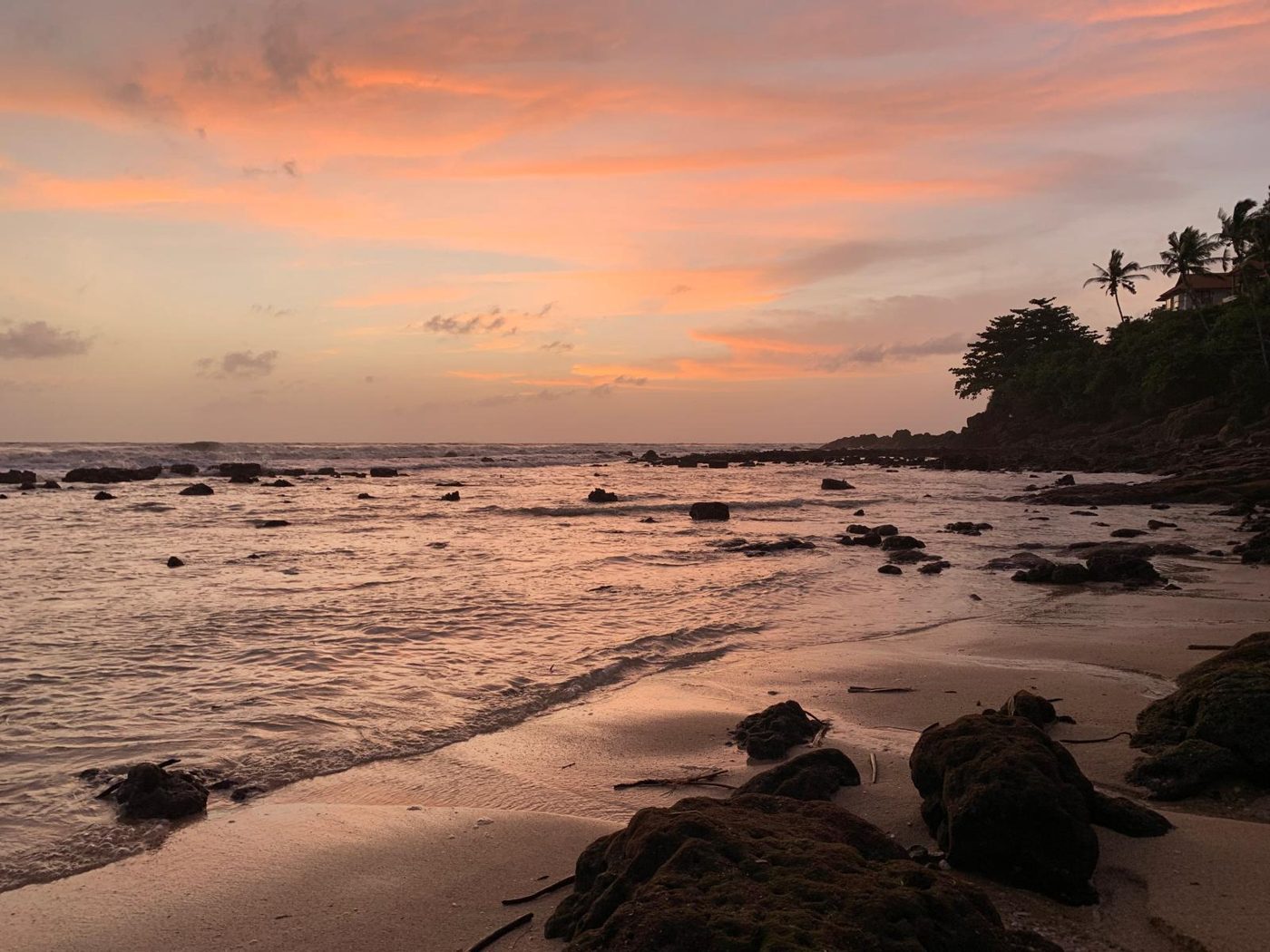
To reach Koh Lipe we flew to Hat Yai, took a transfer to Pak Bara pier, then a boat. That awkwardness is exactly what protects the island: right at the southern tip of Thailand, on the Malaysian border, Koh Lipe is still a small, largely unspoiled paradise.
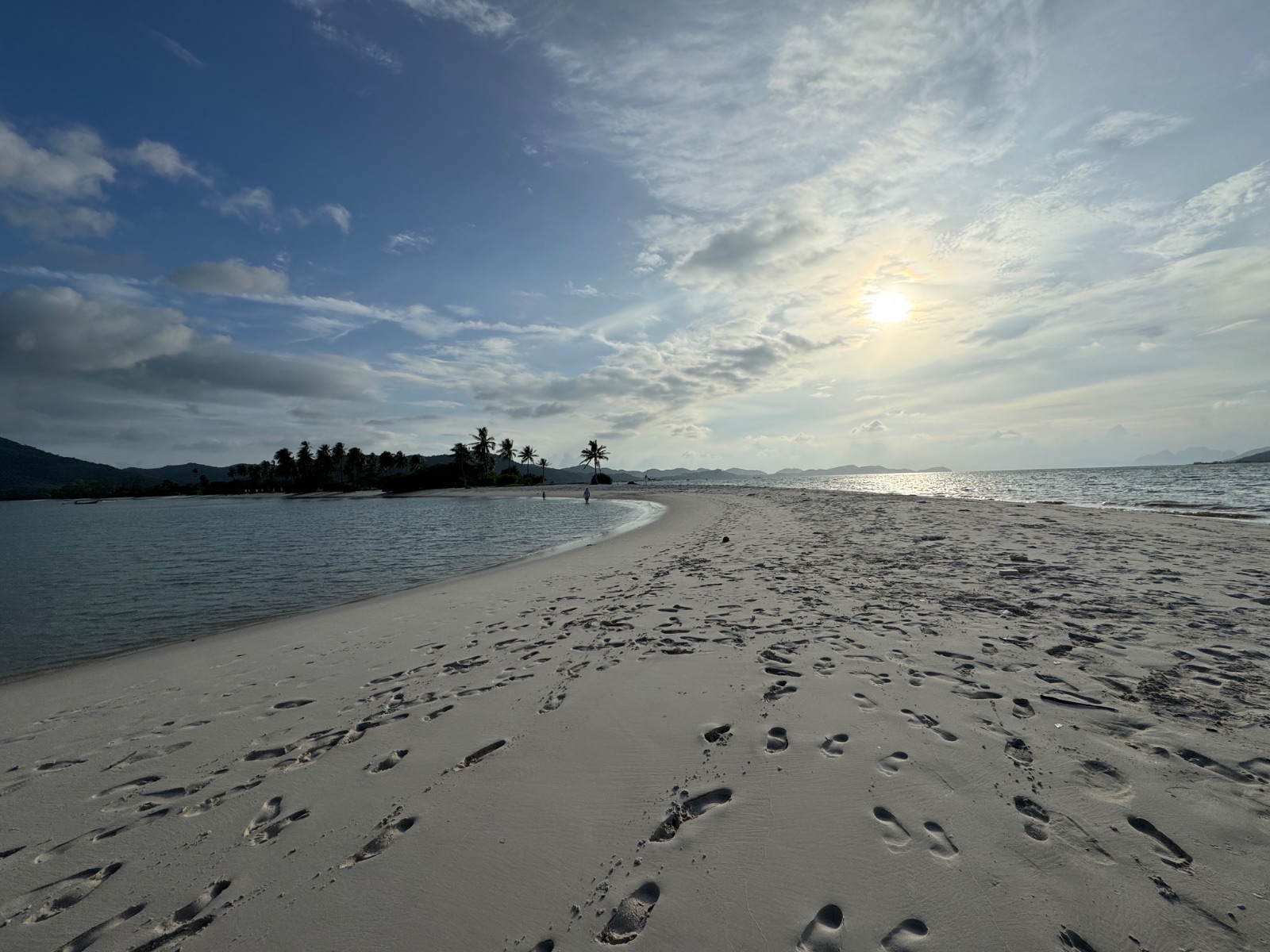
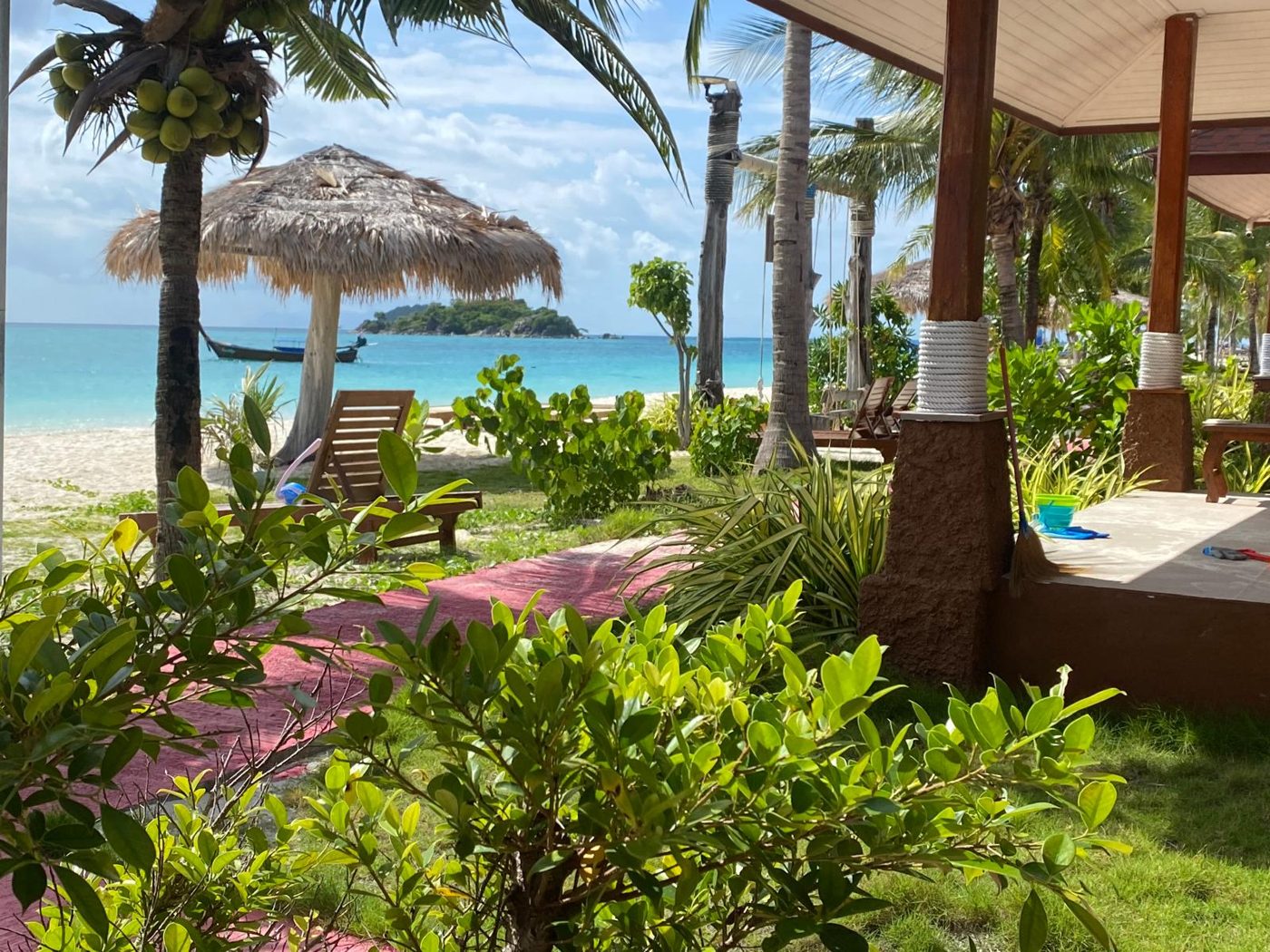
We stayed at the Mali Resort Sunrise Beach, out on the point at the best-known spot on the island, with rooms opening straight onto white sand and water whose colours you do not forget.
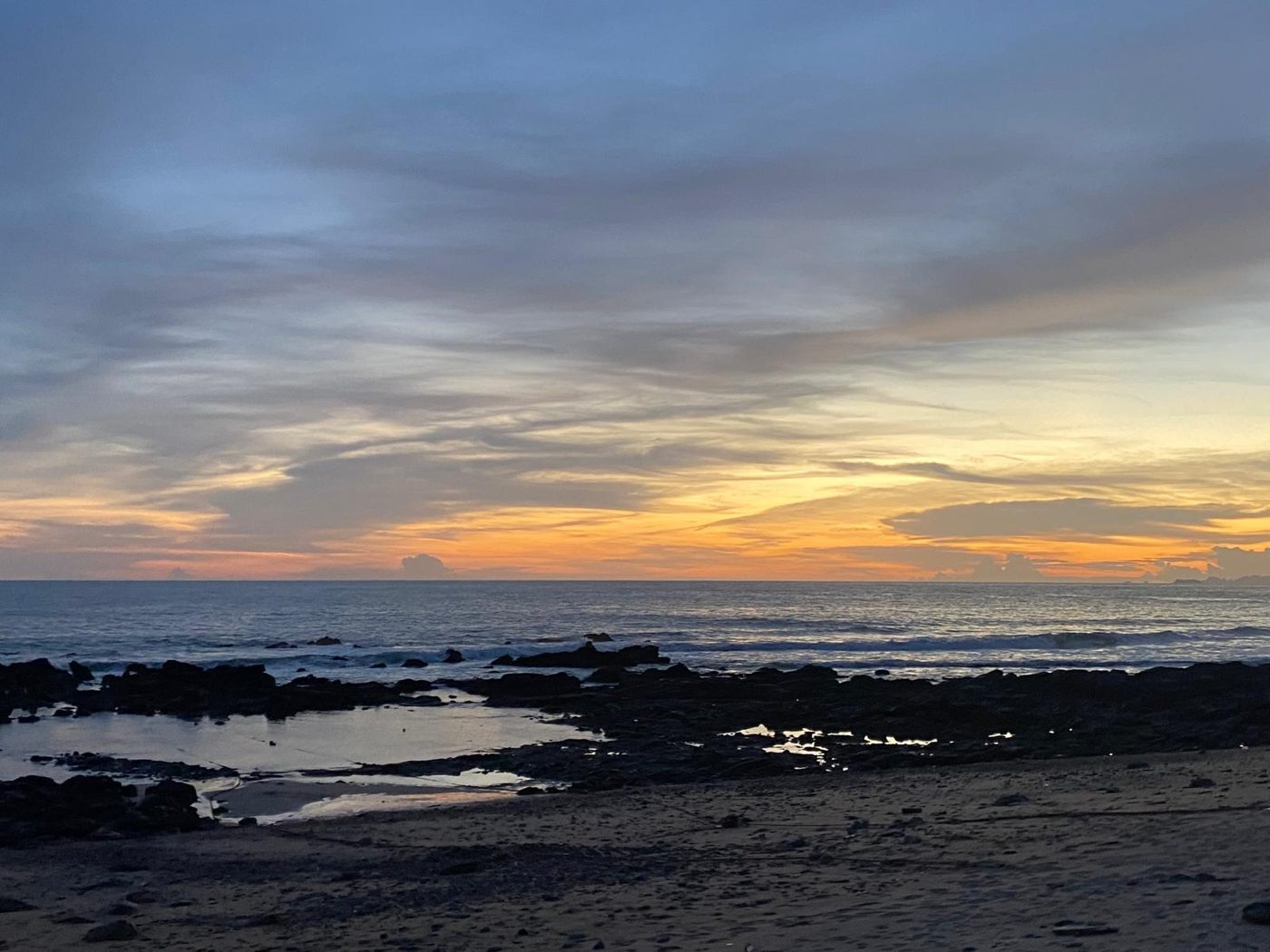
Facing the beach, a small islet (Koh Kra) that we reached by kayak or swimming to snorkel over the coral. Next to it, a little trance bar with its feet in the sand, and a sunset that stops you talking. We also took a longtail out into the Tarutao marine national park: empty islands, translucent water, complete quiet.
Life revolves around the Walking Street: no scooter rental here, but small tuk-tuks always available that come to fetch you from your hotel as soon as you call. And our canteen: a small restaurant on the main street, just past the 7-Eleven — always full, very good, cheap, with lovely owners.
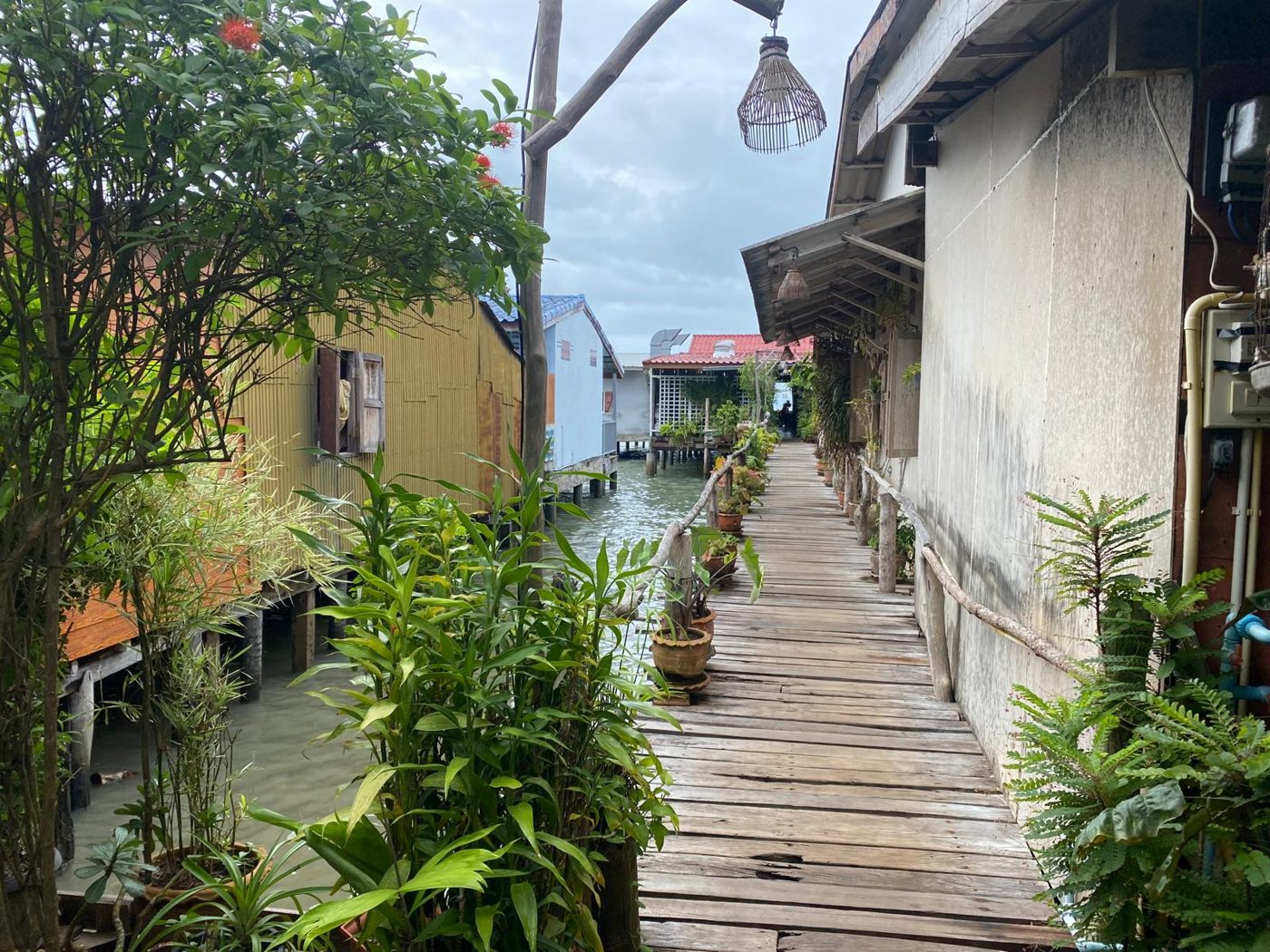
Koh Lanta was the wildest and calmest island of the trip. We loved Lanta Old Town, the old village built on stilts above the water, and the jungle covering the interior. Monitor lizards and monkeys everywhere, and enormous, completely empty beaches.
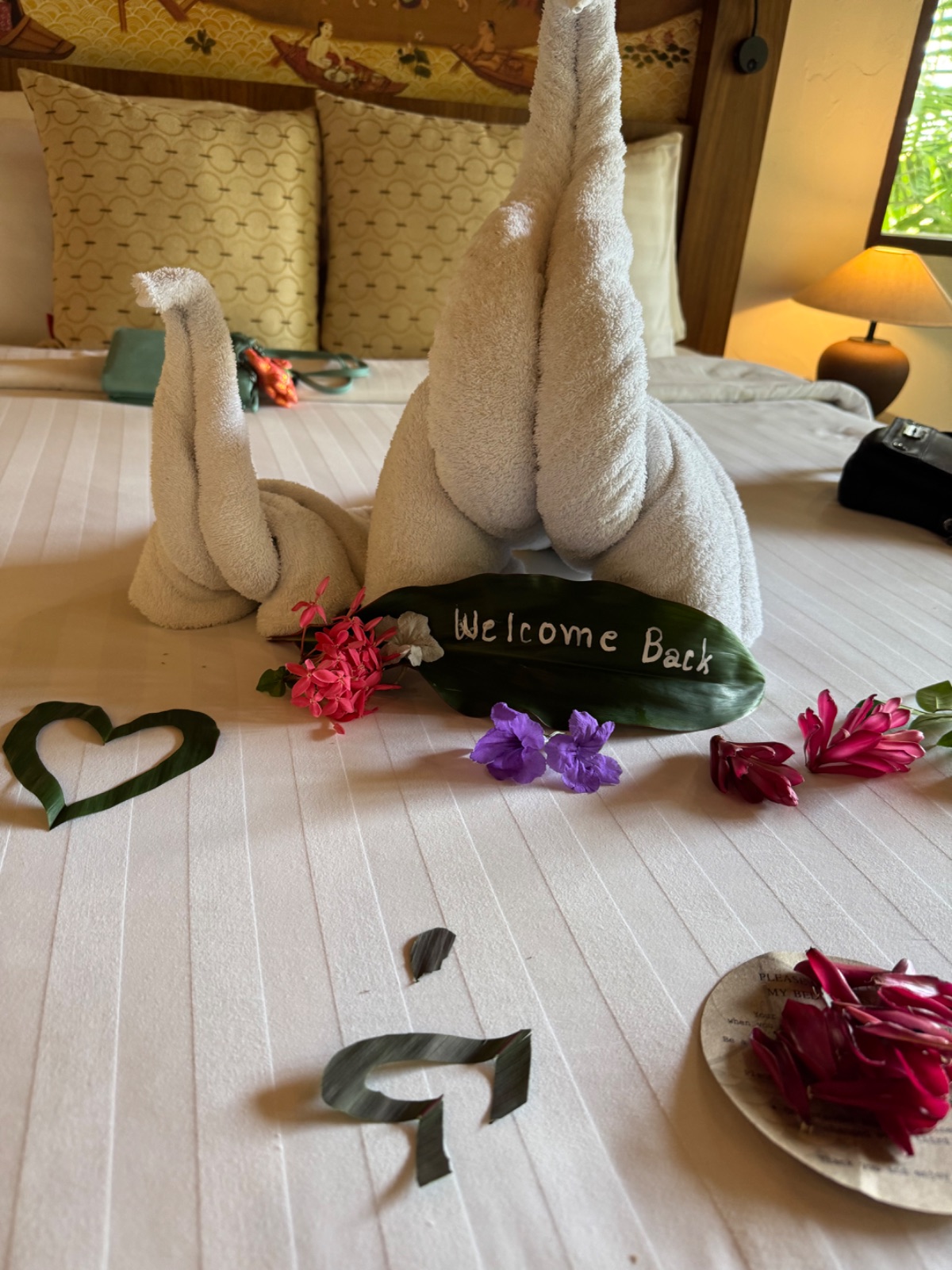
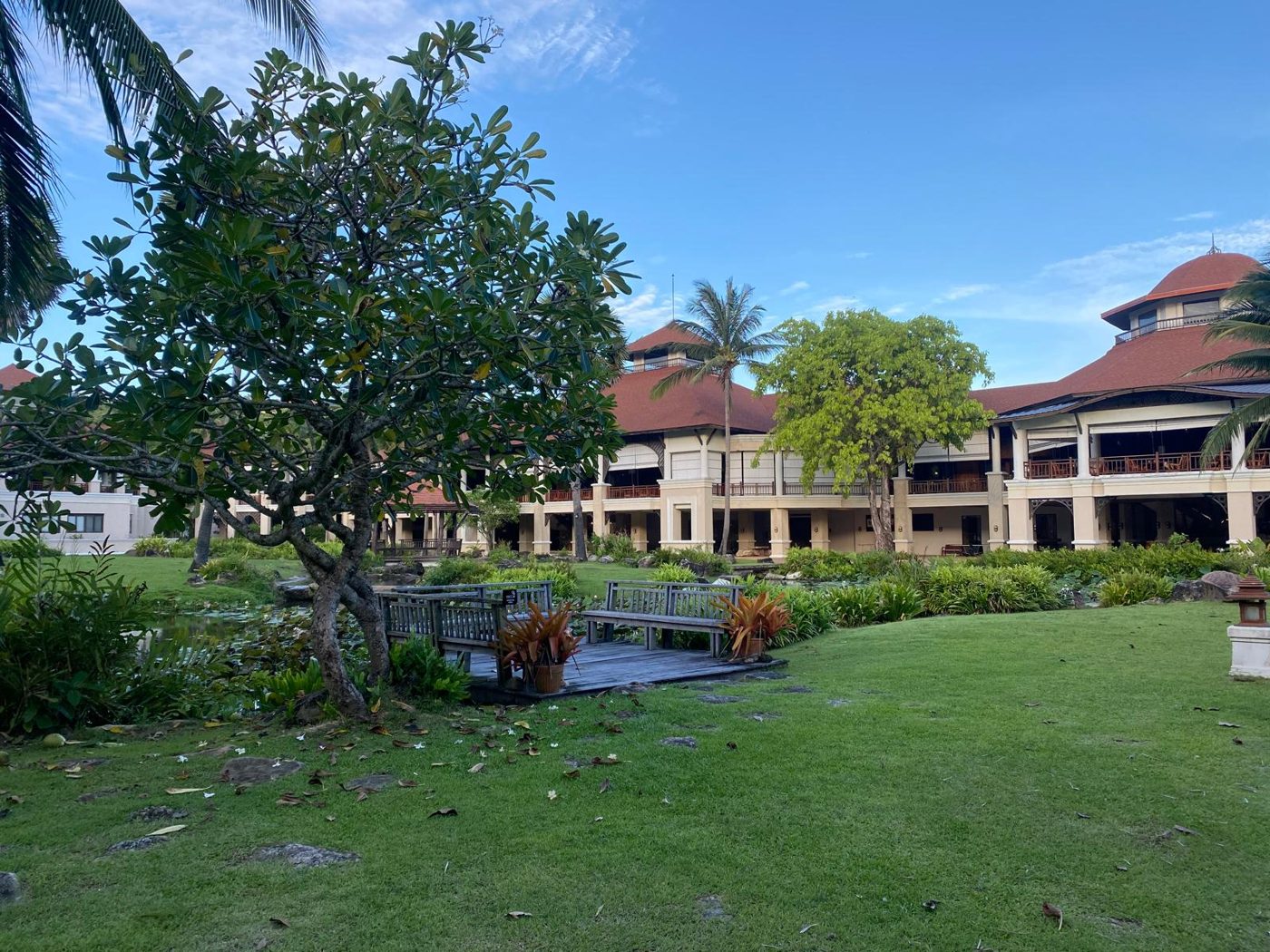
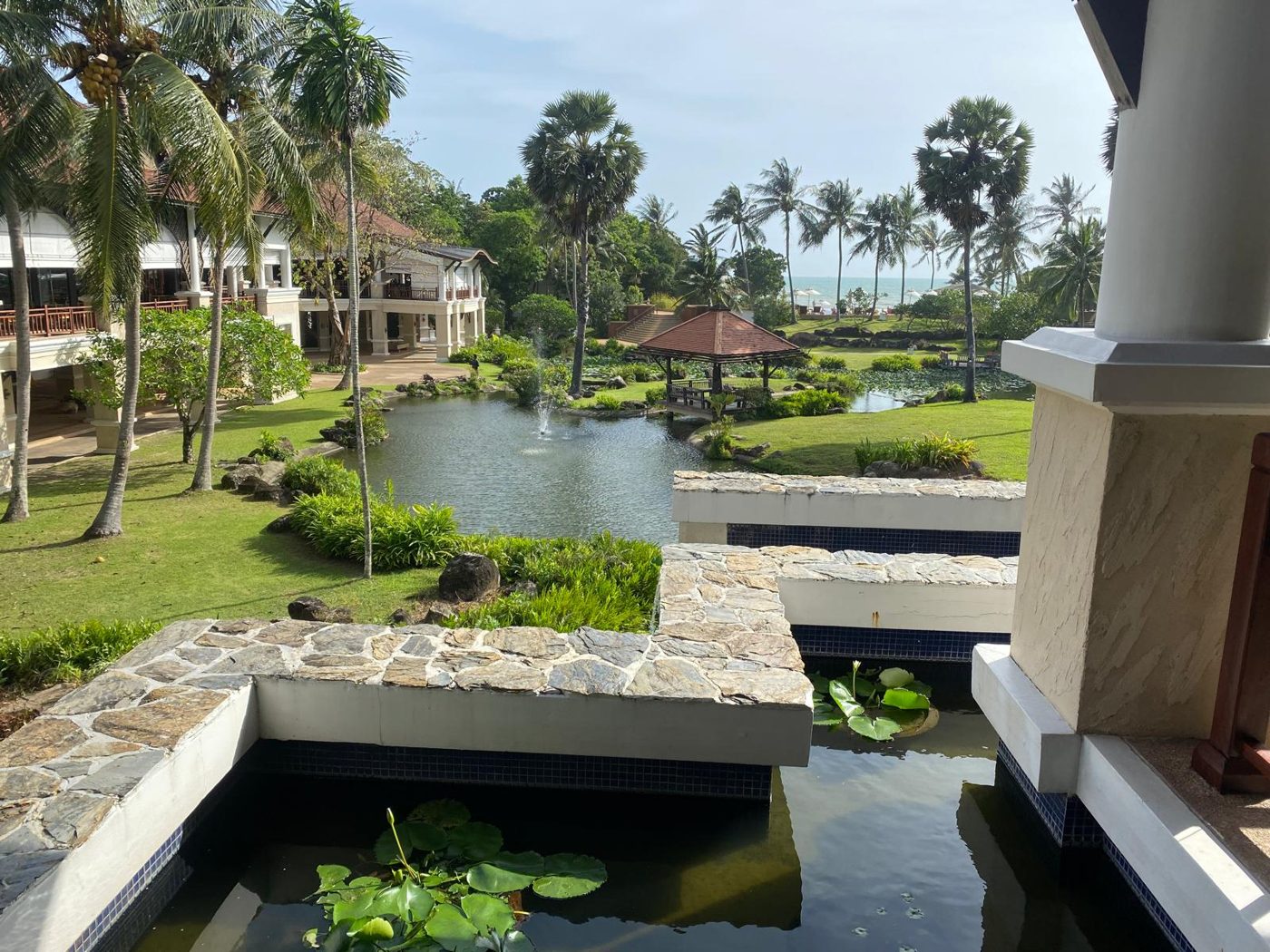
We stayed at the Rawi Warin Resort & Spa, a large property set in a huge tropical garden — ponds, fountains, palms and traditional Thai roofs, absolutely peaceful after a day of exploring. We have been back since, and the welcome is the reason why.
The highlight: the trip out to the Emerald Cave (Tham Morakot) on the neighbouring island of Koh Mook. You go in by swimming, through a dark tunnel in the cliff — mildly intimidating — which suddenly opens onto a hidden beach in the heart of the mountain, open to the sky. One of those moments you struggle to believe.
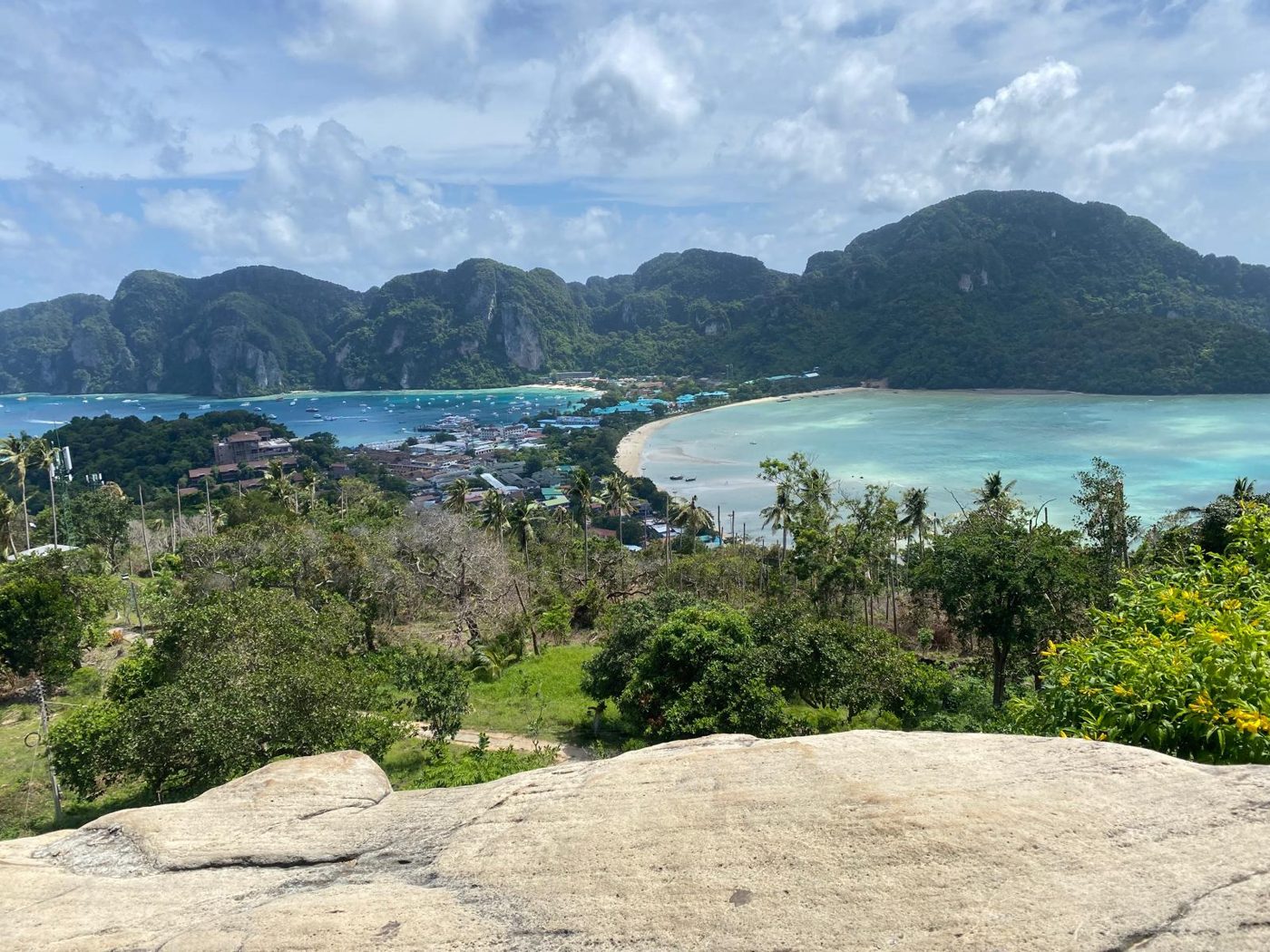
On Koh Phi Phi we stayed at the SAii Phi Phi Island Village Resort, away from the noise, with an outrageous breakfast buffet: over a hundred dishes, omelettes to order, pancakes, pastries. But the real treasure was elsewhere.
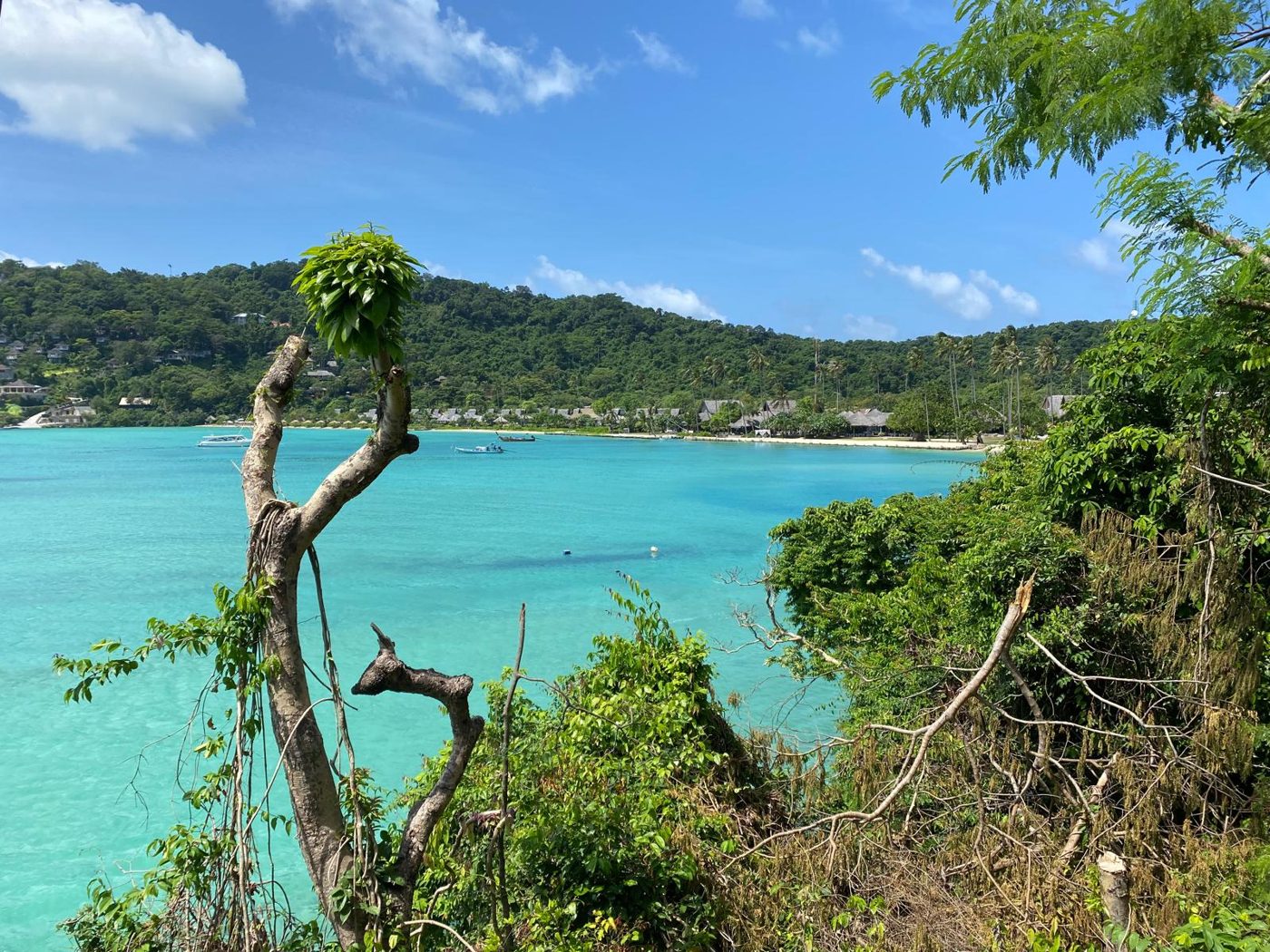
Behind the hotel there is a real village — not the restaurants at the front, but the one where people live. That is where our best encounters happened:
- A tuk-tuk driver who spoke no English at all. We understood each other by gesture, and he was always on time, exactly when he said. Total trust, every single time.
- The masseuses, a hairdresser, a manicurist — all unusually kind.
- The village restaurant, which gave our daughter fruit. When we told them we were leaving, they were genuinely moved that we had come back all week. That kind of bond is not something you buy.
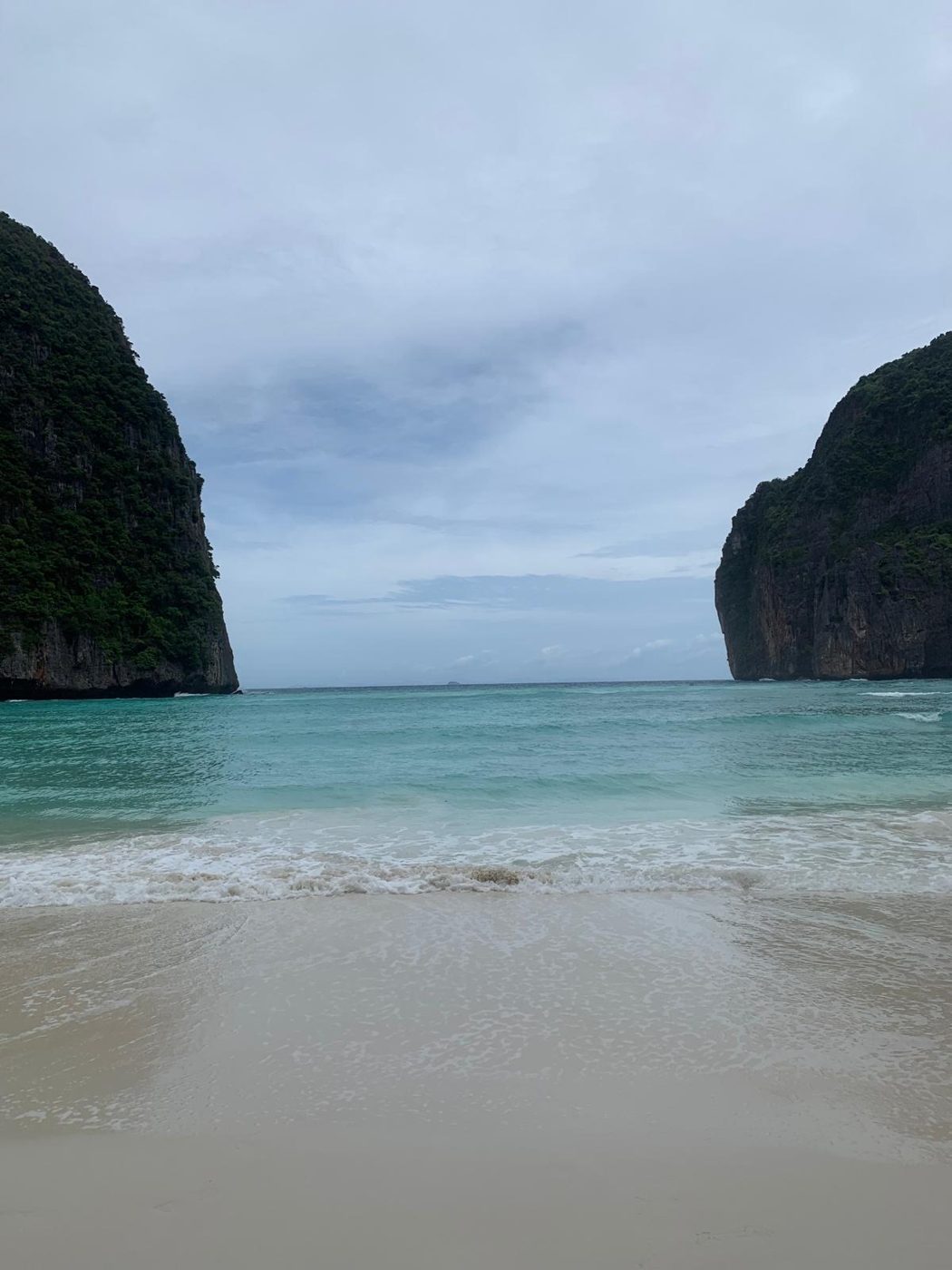
And then there was Maya Bay — the beach from The Beach, with DiCaprio. We left very early and found ourselves almost alone between the cliffs, in a setting that barely looks real. Access is regulated now to protect the site, and to get that near-solitude you simply have to be up before everyone else. A memory for life.
Build YOUR Thailand itinerary in a minute
Your dates, your pace, what you actually feel like doing — we generate a personalised interactive map with your stops, dates and local finds. Free, no account.
Create my trip →A complete change of mood on Koh Tao, over on the Gulf of Thailand side. We stayed at the Cabana Hotel, a five-star at the far end of Sairee Beach, the central beach where the boats come in — attentive staff and enormous round rooms.
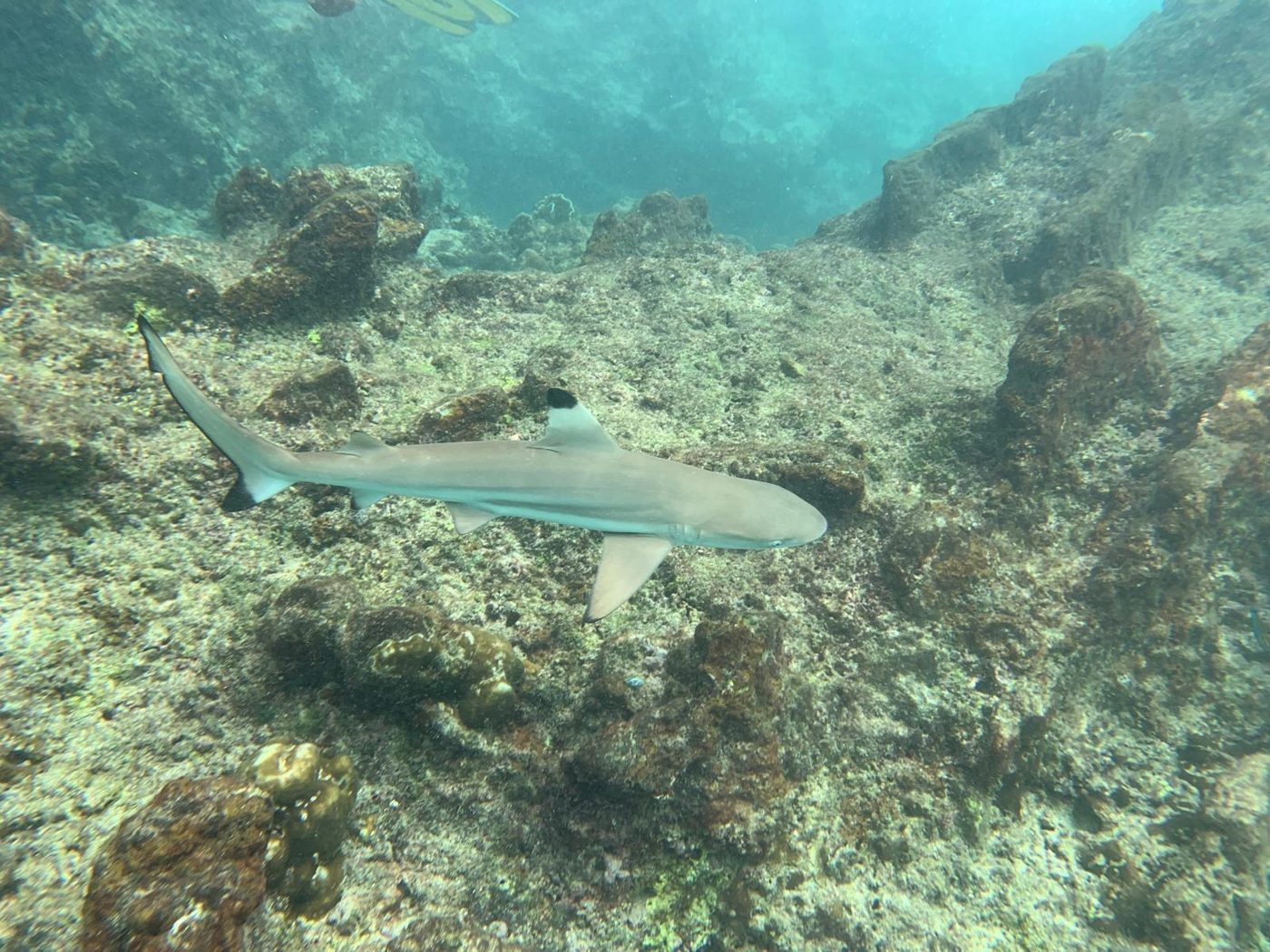
The big moment is Shark Bay (Thian Og Bay): you swim just off the beach with small blacktip reef sharks (entirely harmless) and, above all, green turtles, over hundreds of corals. It is one of the rare places where you see turtles almost every day.
In the evening, head for the liveliest bar on Sairee Beach, recognisable by its leaning palm tree: the Lotus Bar. Loud, fire shows, a happy and slightly unhinged crowd — the island's meeting point at sunset.
We finished at Chumphon, a find very few travellers know: quiet, beautiful, and far more peaceful than the touristy southern islands. It is also the natural crossing point between the Gulf and the mainland.
We took a superb boat trip out to wooden structures built on rocks in the open sea, then into the Mu Ko Chumphon marine national park, full of small hidden corners. It feels like the southern islands, but with nobody there — just silence and the view.
More guides from this coast
We have been back to this part of Thailand since, and three more places from the Andaman coast now have their own full guide in English — all of them in the same spirit: real prices, real flaws, and what the place is not.
- Railay Beach with kids — the cliff peninsula near Krabi, and why sleeping there beats a day trip
- Koh Yao Noi with kids — the island where you do nothing, rice paddies and hornbills included
- A private Phang Nga Bay longtail tour — five islands for 2,000 ฿, Koh Hong before the crowds
Our insider tips
- Look for the "behind". Behind the hotels, behind the main street, there is almost always a village, residents, fair prices and smiles. That is where the real memories hide.
- Get up early. Maya Bay, the Emerald Cave, the turtles at Shark Bay: the best moments happen before the crowd, early in the morning.
- Head north, and head for the quiet. Northern Phuket, Koh Lipe, Chumphon: fewer people, cheaper, more authentic.
- Keep your map offline. On the islands the signal drops fast. A map that works without a connection is what saves you on the ground.
- Trust local people. The tuk-tuk driver who speaks no English may turn out to be the best encounter of your trip.
Quick answers
How long do you need for this itinerary?
To do all six stops without rushing, allow two to three weeks. In two weeks, concentrate on three or four islands — the boat journeys eat more time than the map suggests.
How do you get to Koh Lipe?
Fly to Hat Yai, transfer to Pak Bara pier, then ferry or speedboat. The dry season, November to April, is the reliable window.
Can you really see sharks and turtles on Koh Tao?
Yes, at Shark Bay: small harmless blacktip reef sharks, and green turtles almost every day, especially morning or late afternoon.
What is the best season?
November to April for the Andaman coast (Phuket, Koh Lipe, Koh Lanta, Koh Phi Phi): calm seas and reliable ferries. The green season means fewer people and lower prices, but rougher crossings.
Your turn
Turn this travel diary into your interactive map: your stops, your dates, what you actually want to do. One minute, no account.
Generate my Thailand itinerary →